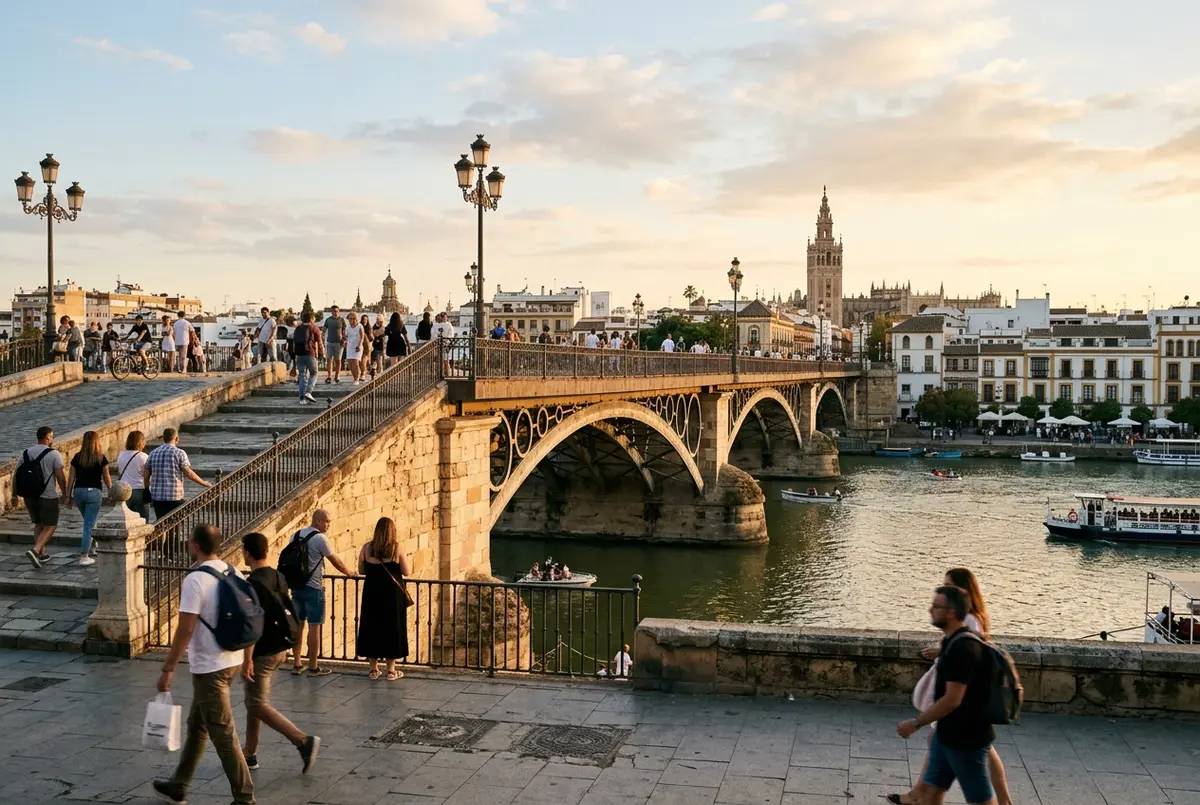
Triana Bridge is the landmark most visitors cross without quite knowing its actual name, the ironwork span that connects Seville’s historic center to the riverside Triana neighborhood. Here’s what I’d actually do: know it as the Puente de Isabel II, its real name, and give yourself five extra minutes on it rather than just walking straight across, since it’s a genuine piece of 19th-century engineering history, not just a route to the other side.
If you’re planning the wider walk into Triana itself, my Triana quarter guide covers the market, ceramics workshops, and tapas route once you’ve crossed. This page focuses on the bridge itself.
What Is Triana Bridge’s Real Name?
Its official name is the Puente de Isabel II, named for the Spanish queen reigning when it was built, though nearly everyone in Seville simply calls it the Puente de Triana or Triana Bridge after the neighborhood it leads to. Both names refer to the same structure.
I would use whichever name gets you understood, honestly, locals recognize both interchangeably, and you won’t confuse a taxi driver or a local by using the more casual “Triana Bridge” over its formal title.
When Was Triana Bridge Built?
Construction ran from 1845 to 1852, replacing a pontoon bridge, a temporary crossing made of boats lashed together, that had linked the two riverbanks for centuries before that near roughly the same spot. It was the first bridge in Seville built entirely of iron, a genuine engineering milestone for the city at the time.
I think that detail gets lost on most visitors crossing today. What looks like a decorative historic bridge was, in its era, cutting-edge infrastructure replacing a genuinely precarious boat crossing.
What Makes Triana Bridge Architecturally Notable?
The design draws direct inspiration from the Pont du Carrousel over the Seine in Paris, and the ironwork itself came from tens of thousands of individual cast-iron pieces assembled at a local foundry. That combination of imported design thinking and local manufacturing is fairly typical of Spain’s 19th-century infrastructure boom.
I would look closely at the railings and arch supports as you cross rather than just admiring the overall silhouette from a distance. The detail in the ironwork holds up well even close-up, which isn’t always true of structures this old.
What Stood Here Before the Bridge?
A pontoon bridge, boats chained together to form a temporary crossing, connected the two riverbanks for centuries before construction began. It linked the old Castillo de San Jorge on the Triana side, once Seville’s Inquisition headquarters, to the city walls on the other bank, until it was finally replaced by the permanent iron structure in 1845.
I’d find it worth remembering as you cross that this exact spot has connected the two halves of Seville for far longer than the current bridge has existed, the boat crossing alone predates it by centuries.
How Do You Walk From the Alcazar to Triana Bridge?
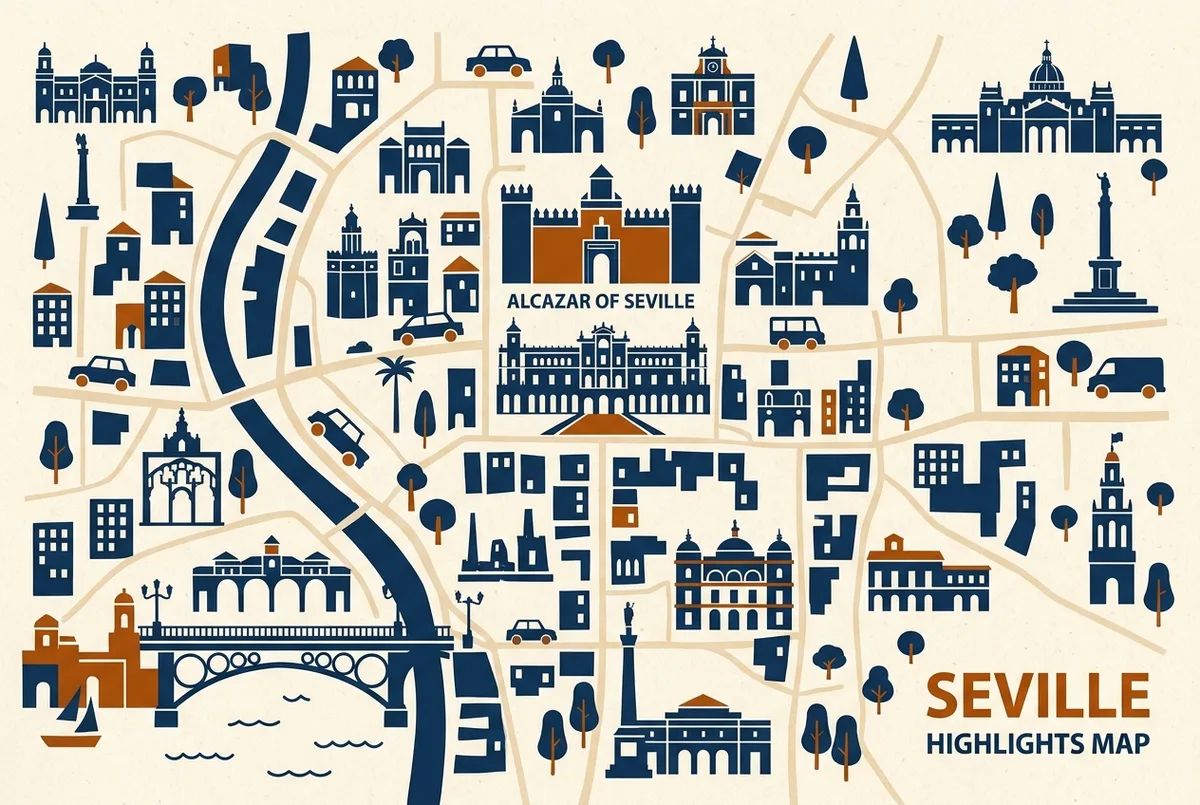
The most direct route follows the riverside promenade past the Torre del Oro, roughly a fifteen to twenty minute walk from the Alcazar’s gates. It’s a genuinely pleasant stretch along the Guadalquivir, and I’d take it over a taxi unless the heat makes walking uncomfortable.
My Alcazar location guide covers exactly how the palace sits relative to the river if you want the broader geography before setting out.
What’s the View Like From Triana Bridge?
Genuinely one of the better sightlines in Seville, looking back toward the Torre del Oro and the old town skyline on one side, and into Triana’s colorful riverside facades on the other. I would time a crossing for late afternoon or early evening, when the light angles low across the water and the ironwork catches a warm glow.
I’d also recommend pausing partway across rather than treating it purely as a route from one side to the other. Most visitors just walk through without stopping, which means missing the actual reason it’s worth the extra five minutes.
Is Triana Bridge Pedestrian Friendly?
Yes, it carries a dedicated pedestrian walkway alongside vehicle traffic and a tram line, and crossing on foot is straightforward and safe at any time of day. I would not hesitate to walk it even during busier traffic hours, since the pedestrian route is fully separated from the road.
My Recommendation
Cross on foot, ideally in the late afternoon, and give yourself a few minutes to actually look at the ironwork rather than just treating it as a route to Triana’s market and tapas bars. It’s a short stop, but a genuinely worthwhile one on its own merits.
For what’s waiting on the other side, my Triana quarter guide covers the neighborhood in full, and my things to do near the Alcazar guide places this crossing within the wider list of nearby stops. According to Wikipedia’s entry on the Puente de Isabel II, it was the first entirely iron bridge built in Seville, a distinction that still holds today.
Frequently Asked Questions
What is the real name of Triana Bridge?
The Puente de Isabel II, named for the reigning Spanish queen when it was completed in 1852. “Triana Bridge” is the common nickname.
When was Triana Bridge built?
Construction ran from 1845 to 1852, replacing a centuries-old pontoon bridge made of boats at roughly the same crossing point.
How long does it take to walk from the Alcazar to Triana Bridge?
About fifteen to twenty minutes along the riverside promenade past the Torre del Oro.
Is Triana Bridge safe to walk at night?
Yes, it has a dedicated pedestrian walkway separated from traffic, and the surrounding riverside stays active into the evening.
alcazar of seville →